

Depollution using irradiation
Plastics derived from waste electrical and electronic equipment (WEEE) present a complex challenge for recycling. At the end of their life, the presence of regulated toxic additives in their composition, particularly brominated flame retardants, prevents them from being reintroduced into conventional production processes.
Electron beam or UV irradiation offers a physical solution to this problem. By using high-energy radiation, this process enables the carbon-bromine bonds to be selectively targeted and broken, thereby decontaminating the material (debromination).
This decontamination technique opens up new possibilities for the treatment of other types of waste streams. Indeed, beyond flame retardants, irradiation can be adapted to degrade other additives or organic pollutants present in various families of engineering plastics.
This device enables the decontamination of DEE using a temperature-controlled solvent and a UV lamp.
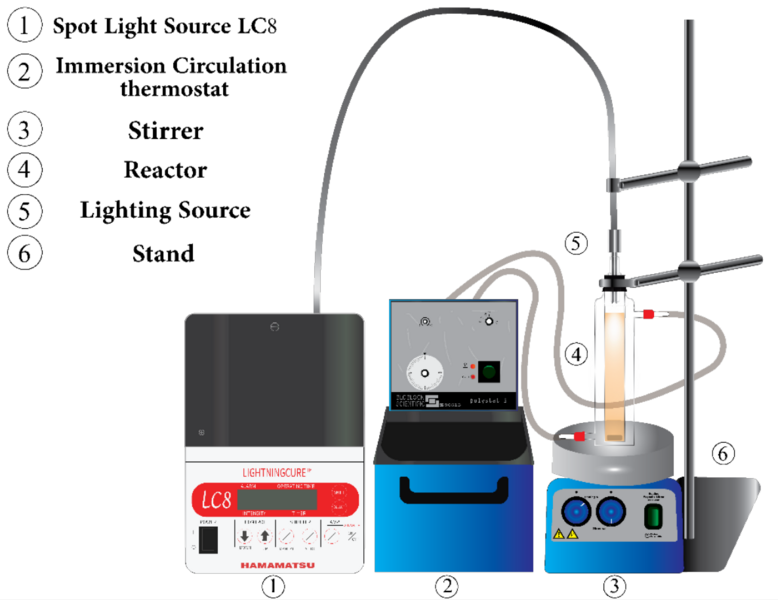
*Adapted from https://doi.org/10.3390/catal15010088
This device uses a high-voltage beam of accelerated electrons to selectively break the chemical bonds of pollutants. The process is carried out in an inert atmosphere (without oxygen) to minimise secondary reactions. The irradiation dose, measured in kilograys (kGy), is precisely controlled by the feed rate of the material and the number of passes, allowing the treatment to be tailored to the level of contamination in the material.
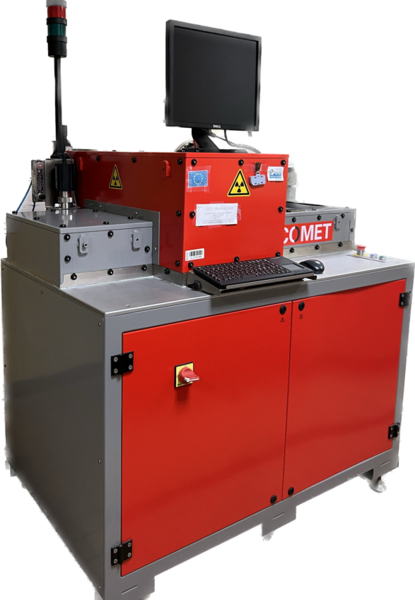
*Adapted from: https://doi.org/10.3390/molecules28237753
Recent publications:
-
Benmammar, R. K., Bouberka, Z., Malas, C., Carpentier, Y., Haider, K. M., Mundlapati, V. R., Ziskind, M., Focsa, C., Khelifi, S., Poutch, F., Laoutid, F., Supiot, P., Foissac, C., & Maschke, U. (2024). Degradation of decabromodiphenyl ether dispersed in poly (Acrylo-Butadiene-Styrene) using a rotatory laboratory pilot under UV-Visible irradiation. Molecules, 29(21), 5037. https://doi.org/10.3390/molecules29215037
-
Benmammar, R. K., Mundlapati, V. R., Bouberka, Z., Barrera, A., Staelens, J., Tahon, J., Ziskind, M., Carpentier, Y., Focsa, C., Supiot, P., Foissac, C., & Maschke, U. (2023). Electron beam processing as a promising tool to decontaminate polymers containing brominated flame retardants. Molecules, 28(23), 7753. https://doi.org/10.3390/molecules28237753
-
Aldoori, H., Bouberka, Z., Feuchter, H., Khelifi, S., Poutch, F., Brison, L., Laoutid, F., Steuperaert, S., Foissac, C., Supiot, P., Malas, C., & Maschke, U. (2023). Recycling of Plastics from E-Waste via Photodegradation in a Low-Pressure Reactor: The Case of Decabromodiphenyl Ether Dispersed in Poly(acrylonitrile-butadiene-styrene) and Poly(carbonate). Molecules, 28(6), 2491. https://doi.org/10.3390/molecules28062491
-
Oumeddour, H., Aldoori, H., Bouberka, Z., Mundlapati, V. R., Madhur, V., Foissac, C., Supiot, P., Carpentier, Y., Ziskind, M., Focsa, C., & Maschke, U. (2023). Degradation processes of brominated flame retardants dispersed in high impact polystyrene under UV–visible radiation. Waste Management & Research the Journal for a Sustainable Circular Economy, 42(12), 1241–1252. https://doi.org/10.1177/0734242x231219626
In addition to the experimental set-ups already in place, our team regularly develops and invests in new set-ups and instruments to meet specific needs.
So do not hesitate to contact us to discuss your specific requirements.